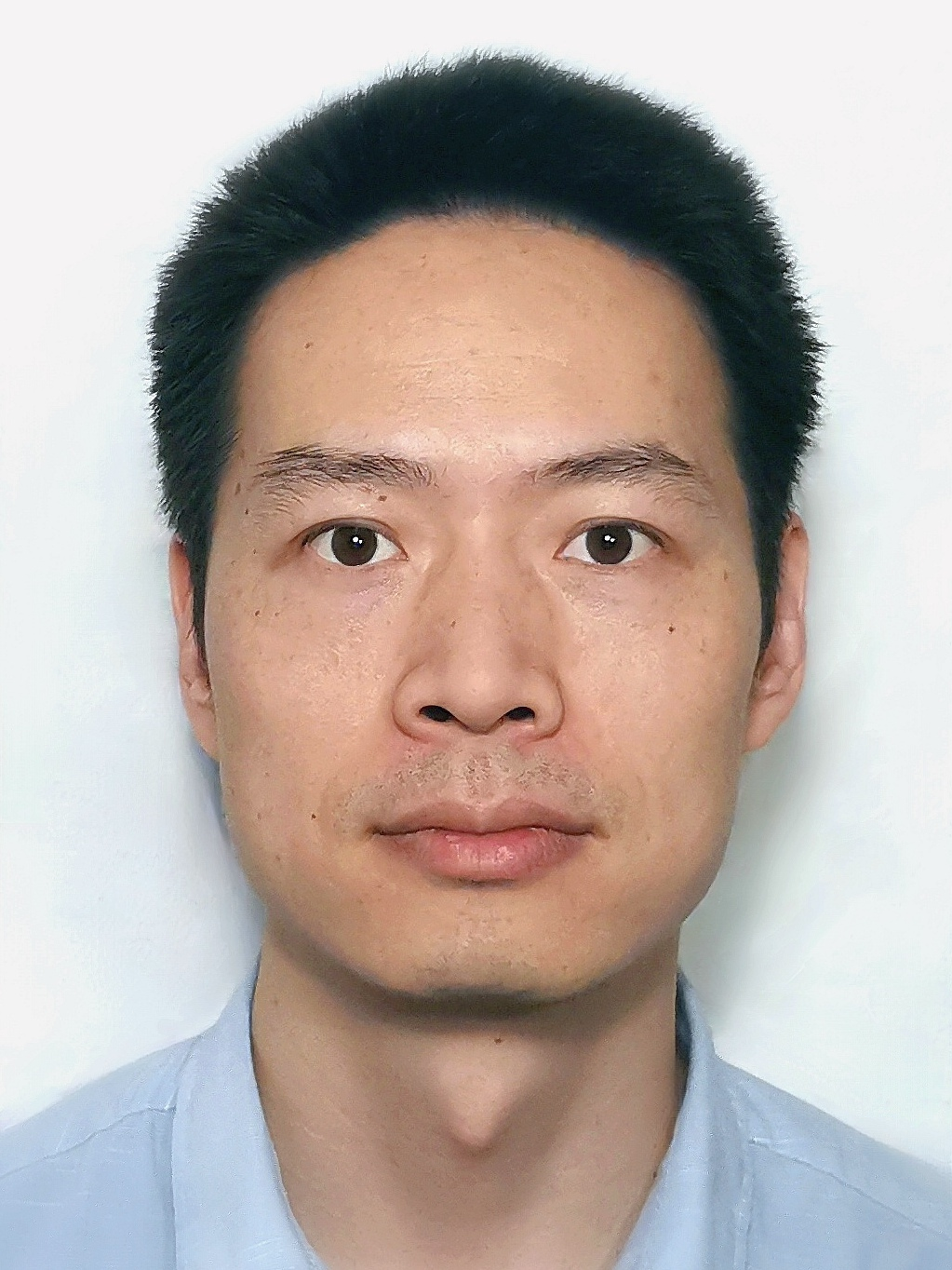
张俊杰,男,项目研究员。2011年本科毕业于中国科学技术大学,2014年硕士毕业于中国科学院广州地球化学研究所,2018年博士毕业于香港大学,随后在香港大学从事研究助理工作。2020年7月–2025年9月在德国莱布尼兹应用地球物理研究所做博士后。2025年11月入职中国科学院海洋研究所。长期从事释光年代学研究,发表SCI论文30余篇,其中以第一/通讯作者在Communications Earth & Environment、Geology、Quaternary Geochronology等期刊上发表论文18篇。
ORCID: 0000-0001-7619-7776
ResearchGate主页: https://www.researchgate.net/profile/Junjie-Zhang-9/research
一、研究领域
释光年代学方法开发及其在古气候、构造活动、考古等研究领域的应用
二、招生专业及方向
海洋地质(海洋沉积学,古海洋与古环境)
三、研究室及联系方式
海洋地质与环境研究室
邮箱:junjiezhang@qdio.ac.cn
四、承担的主要科研项目
1.中国科学院海洋研究所专项项目,海洋碳酸盐矿物释光测年技术的开发和应用,2025.11–2029.10,在研,主持。
2.德国科学基金会 (Deutsche Forschungsgemeinschaft, DFG),Testing the isothermal thermoluminescence dating method to constrain mid-Pleistocene speleothem growth phases in the Bleßberg Cave,2022.9–2024.2,结题,主持。
五、研究成果及奖励
主要研究成果表现在以下几个方面:1)改进钾长石光释光测年技术,为洛川黄土建立过去35万年来的绝对年代框架,验证了黄土高原中部地区黄土堆积的连续性;2)研究石英光释光信号的灵敏度在黄土高原的黄土层与古土壤层中的变化规律,指出石英光释光灵敏度可以作为一个新的古野火指标;3)克服碳酸盐热释光测年中的技术难题,并成功应用于石笋、钙华、珊瑚的结晶年龄(或改造年龄)的测定;4)开发基于碳酸盐矿物释光测年的低温热年代学技术,研究碳酸盐岩地质体的隆升剥露历史。
六、代表性论文及著作
1.Zhang, J.*, Tsukamoto, S.*, Bussert, R., Delagnes, A., Kraatz, B., Salih, K., Eisawi, A., Bibi, F.*, 2026. New age constraints for the Singa hominin and the adjacent Abu Hugar fossil site. Quaternary Geochronology 93, 101733.
2.Wang, L.*, Zhang, J.*, Liu, C., Zhang, H., Zhang, D.D., Deng, H., Liu, Y., Chen, F., 2026. ITL dating resolves chronology of Quesang travertine hand- and footprints, Tibetan plateau. Journal of Archaeological Science 192, 106630.
3.Zhang, J.*, Arriga, G., Rossetti, F.*, Argante, V., Kraemer, D., Sontag-González, M., Cosentino D., Cipollari P., Tsukamoto, S., 2025. Dolomite luminescence thermochronometry reconstructs the low-temperature exhumation history of carbonate rocks in the central Apennines, Italy. Communications Earth & Environment 6, 252.
4.Zhang, J.*, Klose, J., Scholz, D., Marwan, N., Breitenbach, S.F.M., Katschmann, L., Kraemer, D., Tsukamoto, S., 2024. Isothermal thermoluminescence dating of speleothem growth – A case study from Bleßberg cave 2, Germany. Quaternary Geochronology 85, 101628.
5.Zhang, J.*, Zolitschka, B., Hogrefe, I., Tsukamoto, S., Binot, F., Frechen, M., 2024. High-resolution luminescence-dated sediment record for the last two glacial-interglacial cycles from Rodderberg, Germany. Quaternary Geochronology 82, 101535.
6.Zhang, J., Li, S.-H.*, Sun, J., Lü, T., Zhou, X., Hao, Q., 2023. Quartz luminescence sensitivity variation in the Chinese loess deposits: the potential role of wildfires. Journal of Quaternary Science 38, 49–60.
7.Zhang, J., Hao, Q.*, Li, S.-H.*, 2022. An absolutely dated record of climate change over the last three glacial–interglacial cycles from Chinese loess deposits. Geology 50, 1116–1120.
8.Zhang, J.*, Tsukamoto, S., 2022. A simplified multiple aliquot regenerative dose protocol to extend the dating limit of K-feldspar pIRIR signal. Radiation Measurements 157, 106827.
9.Zhang, J., Wang, L.*, 2020. Thermoluminescence dating of calcite – Alpha effectiveness and measurement protocols. Journal of Luminescence 223, 117205.
10.Zhang, J., Li, S.-H.*, Sun, J., Hao, Q., 2018. Fake age hiatus in a loess section revealed by OSL dating of calcrete nodules. Journal of Asian Earth Sciences 155, 139–145.

 鲁公网安备37020202001323号



